
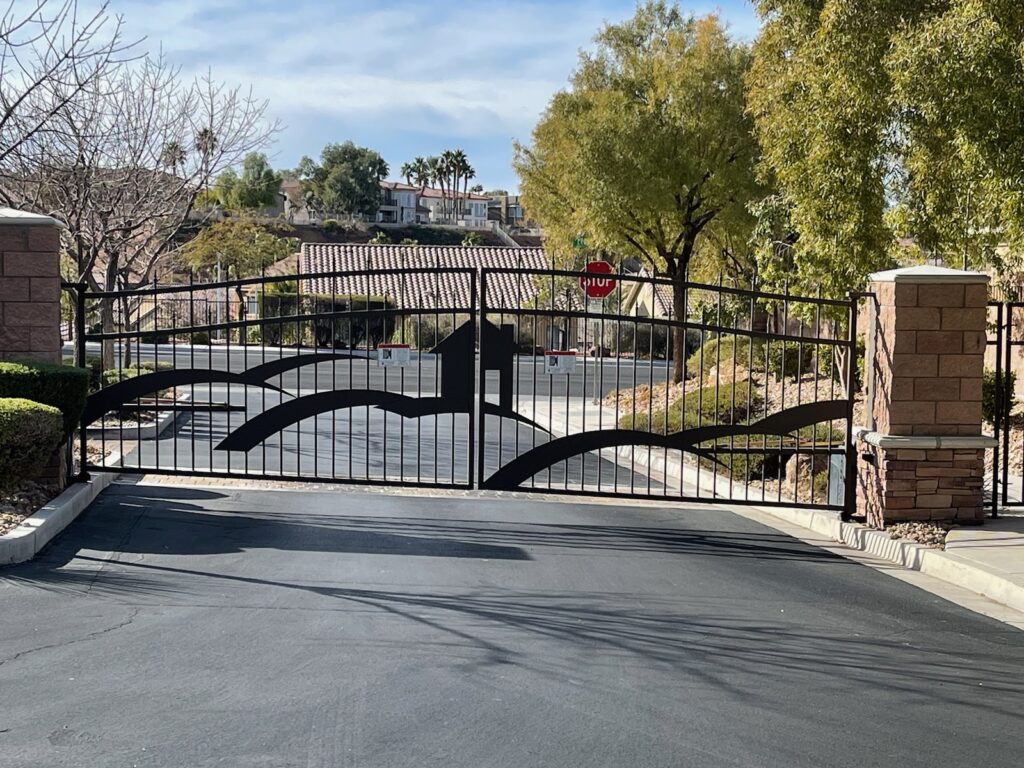
The Automated Entry Gate for a Las Vegas Homeowners Association (HOA) acts as the frontline of community security, aesthetic appeal, and property value. However, the unique environmental pressures of Southern Nevada put massive strain on electro-mechanical security gates.
Between fine desert windstorms, intense thermal expansion, and near-constant daily traffic, automatic gate systems in Las Vegas require targeted care. Implementing a structured preventative gate maintenance program helps HOA boards protect community reserve funds, mitigate liability, and prevent unexpected access outages.
The Harsh Realities of the Las Vegas Climate on HOA Gates
Operating an automated gate in the Mojave Desert presents physical challenges that communities in milder climates rarely face. Understanding these environmental hazards is the first step toward building an effective maintenance schedule.
- Extreme Thermal Expansion: Summer temperatures in Las Vegas routinely exceed 110°F, pushing ambient metal surfaces past 150°F. This intense heat causes wrought iron, aluminum, and internal mechanical gears to expand. Without proper calibration, gate leaves can drag, strike receiver posts, or cause severe internal binding within the operator motor.
- Abrasive Caliche Dust and Windstorm Debris: High-velocity windstorms across the Las Vegas Valley drive fine silica dust and sand into gate tracks, hinges, and chain drives. This abrasive particulate strips factory lubricants, turns grease into an abrasive grinding paste, and rapidly degrades moving internal components.
- UV Degradation on Access Control Systems: Intense desert sunlight deteriorates rubber seals, housing gaskets, keypad overlays, and safety photo-eye lenses. Over time, UV radiation yellows optical sensors, causing phantom stops or preventing gates from closing altogether.
According to research published by the Community Associations Institute (CAI), proactive maintenance strategies can yield an operational return on investment up to 500% compared to reactive repairs, largely by preventing catastrophic equipment failures before they occur.
Essential Pillars of an HOA Preventative Maintenance Program
A robust gate maintenance plan requires systematic attention to physical hardware, electronic safety devices, and access control integrations.
- Mechanical & Hardware Care
- Lubrication Strategy: Avoid heavy greases that trap desert dust. Technical specialists recommend high-grade synthetic, non-attracting silicone or PTFE spray lubricants for hinges, rollers, chains, and counter-balance springs.
- Structural Alignment: Inspect heavy swing and slide gates for sag or frame warping caused by thermal cycling. Re-align gate stops, guides, and track assemblies to prevent friction overload on the gate operator.
- Welding and Ironwork Integrity: Check high-stress weld points near operator arms and mounting brackets for micro-fractures, which expand under heavy daily cycling.
- Drive System and Electrical Testing
- Chain and Belt Tensioning: Cold winter nights and hot summer days cause metal drive chains to contract and stretch. Ensure chains maintain roughly 0.5 to 0.75 inches of slack to prevent motor bearing damage.
- Pest and Debris Mitigation: Las Vegas pests—including geckos, spiders, and rodents—frequently nest inside warm electrical operator enclosures during cooler months. Inspect and seal control boxes to prevent short circuits on costly circuit boards.
- Backup Battery Systems: Extreme desert heat drastically shortens the lifespan of standby battery systems. Test backup batteries quarterly to ensure compliance during regional power grid interruptions.
- Safety Device Inspections & Legal Compliance
HOA boards hold significant legal liability regarding gate safety. Automated vehicular gates must adhere strictly to UL 325 safety standards and ASTM F2200 structural construction guidelines to prevent entrapment hazards.
- Photo-Eye Alignment and Cleaning: Wiping down reflective sensors and optical lenses monthly prevents dust buildup from triggering false stops.
- In-Ground Vehicle Loop Detectors: Inspect asphalt and concrete pavement cuts for cracking or water intrusion that can disrupt the electromagnetic fields of reverse and exit loops.
- Entrapment Reversal Testing: Test mechanical edge sensors and intrinsic motor reversing mechanisms using a standard test block to ensure immediate reversal upon contact.
Detailed compliance standards and safety specifications for automatic gate operators can be reviewed directly through the Occupational Safety and Health Administration (OSHA).
Seasonal Maintenance Checklist for Las Vegas HOAs
To streamline board oversight and vendor management, track gate care across a four-season schedule tailored to local climate shifts:
Season | Primary Maintenance Focus Areas |
Spring (March – May) | Clear dust accumulation post-windstorms; inspect solar panels and electrical connections; inspect chain tension before heat sets in. |
Summer (June – August) | Inspect gate alignment for heat expansion; test loop detector sensitivity; test battery backup readiness under heavy AC grid loads. |
Fall (September – November) | Clean operator cabinets to prevent winter pest nesting; service hydraulic fluids; lubricate hinges and bearings after summer heat wear. |
Winter (December – February) | Check battery performance during colder nights; test safety reversal mechanics; adjust limit switches affected by metal contraction. |
Financial and Safety Benefits for HOA Boards
Transitioning an association from a “call when broken” model to a structured preventative maintenance agreement delivers three core benefits to property managers and board members:
- Reserve Study Longevity: Commercial gate operators represent a significant capital expense. Routine servicing extends the operational life of gate operators from 7–10 years to 15+ years, keeping reserve funding projections accurate and avoiding special assessments.
- Mitigation of Community Liability: An unmaintained gate that strikes a pedestrian or vehicle exposes the HOA to substantial legal exposure. Documented, professional maintenance logs serve as critical evidence of due diligence and duty of care.
- Enhanced Property Values and Security: Non-functioning entry gates leave gated communities completely exposed, frustrating residents and weakening the perception of safety. Consistent maintenance ensures smooth, quiet, and reliable entry year-round.
Securing Your Community Investment
Managing an HOA in Las Vegas requires balancing long-term financial health with immediate resident safety. Automated vehicular gates are among the most heavily used mechanical assets in any community, cycling dozens or hundreds of times each day.
By partnering with licensed, C-14 certified local gate contractors and enforcing a rigorous seasonal preventative maintenance schedule, HOA boards can protect community assets against harsh desert elements, reduce emergency repair bills, and maintain the secure, high-value living environment that residents expect.
Advanced Technology has been providing excellent service to customers in the greater Las Vegas area for over 20 years. Advanced Technology designs & repairs safe & secure, well-planned, and professionally installed automatic gate and electronic entry systems.
Our company also provides video surveillance systems and many other specialty systems and products including custom options like wrought iron gates, fencing, equipment & repairs. At Advanced Technology, we take great pride in our work. We offer professional design, premium equipment, and Code-grade installations. Our systems are in full compliance with UL Article 325, which mandates safety requirements for all automatic gates within the United States. Call Us today at (702) 633-7360.